ELF (End-to-end Logistics Flow) is how General Mills decides how orders move through its supply chain. It was built with Palantir.
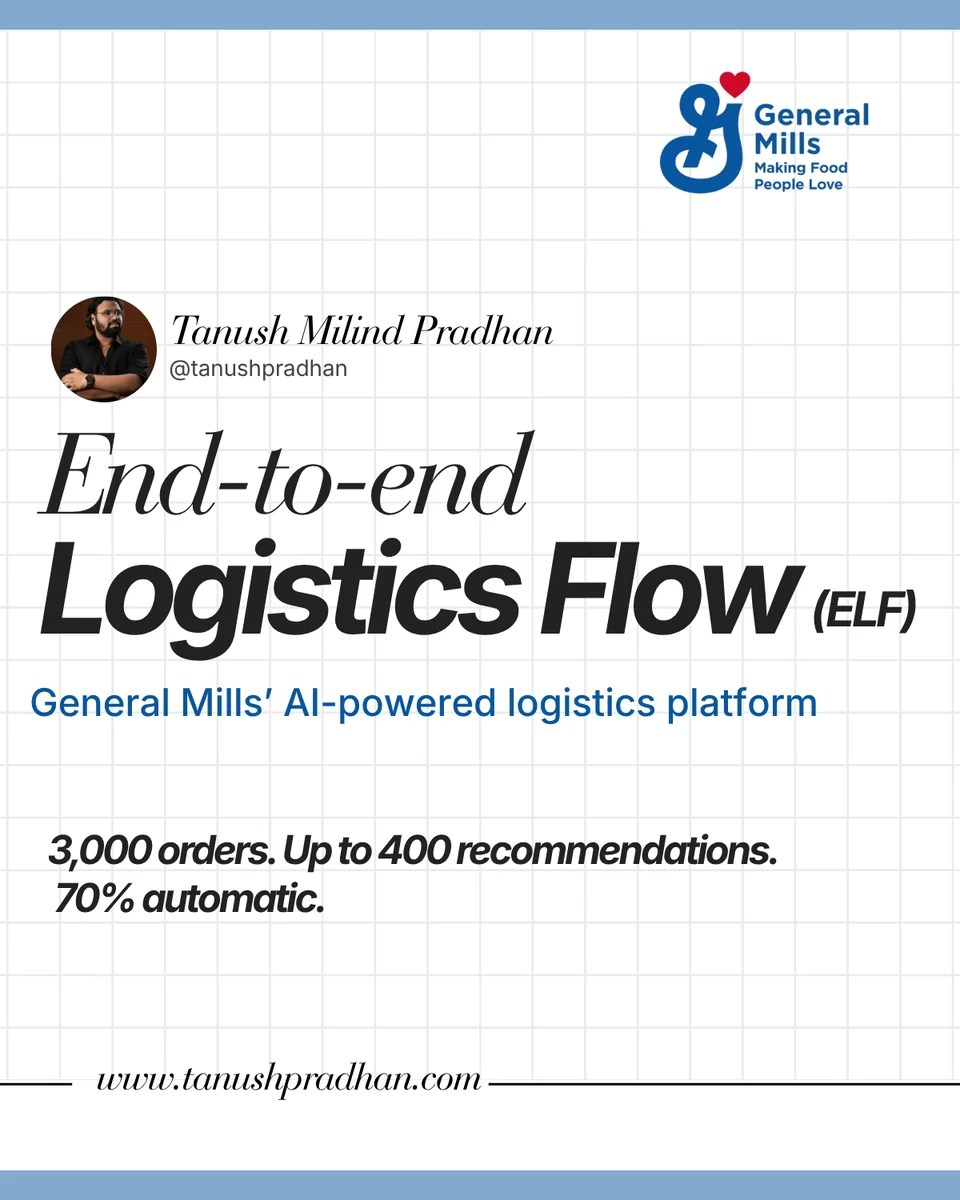
According to 2024 reporting on the US human foods business, about 3,000 orders are checked more than 100 times a day. That produces up to 400 recommendations, and about 70% are accepted automatically. A decision that used to take a day now takes about a minute.
What I keep thinking about is the other 30%. Those need a person to look at them. If I were working on it, I would try three things:
- Group the exceptions by cause, so reviewers aren’t working through one long list
- Show the likely reason next to each exception
- Use past reviewer decisions to cut down repeat cases
I don’t know how the team handles this today, so this is an outsider’s guess based on public information. Corrections welcome.
If you work in supply chain, how do you handle exceptions like these?
This began as a LinkedIn post. You can read it, and the discussion under it, on LinkedIn.